Why rats choose dinner over company — and what their brainwaves say about it
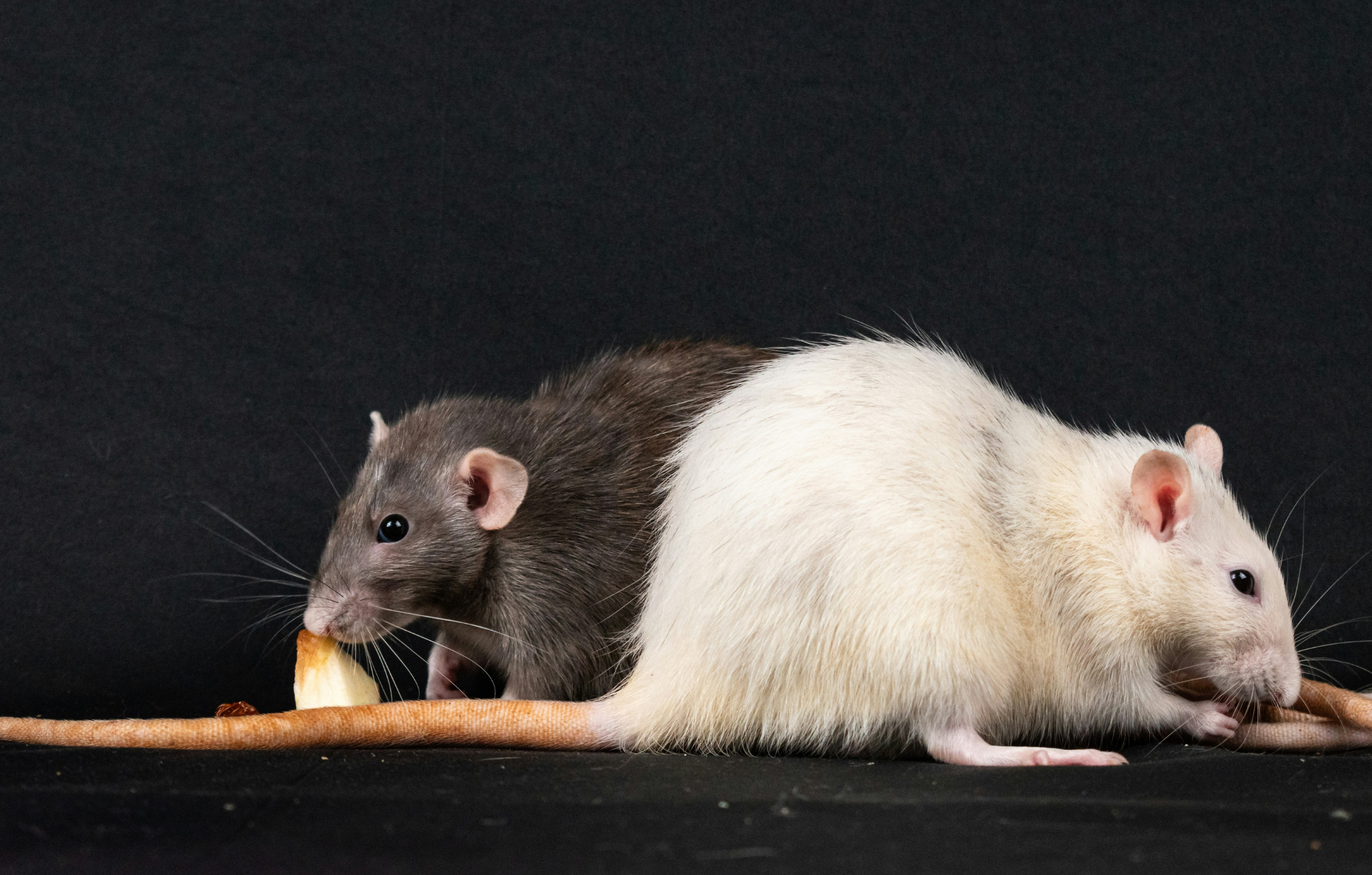

Offer an animal a straightforward choice between food and social contact, and you might expect the outcome to hinge on how hungry it is.
A team at the Pablo de Olavide University in Seville wanted to know something more specific: when a rat with unlimited food available still has to decide, moment to moment, whether to eat or to interact with another rat, what is happening in the brain regions that are supposed to be weighing up the two options?
That sounds like a simple behavioural question, but it is a difficult one to answer properly.
Most studies of reward compare an animal's preference for one thing over another using a single measure — time spent, number of approaches, lever presses. Far fewer look at what several interconnected brain regions are doing, simultaneously, at the exact moment a reward is chosen and delivered.
To do that you need chronic, multi-site electrophysiology: several sets of electrodes, implanted in different structures, recording continuously while the animal goes about a task, for long enough that the data mean something statistically.
It is one thing to record a single region for an afternoon. It is another to hold five channels stable and quiet in a freely moving rat over ten consecutive days.
Florbela Rocha-Almeida, Ana R. Conde-Moro, Antonio Fernández-Ruiz, José M. Delgado-García and Agnès Gruart set up exactly that experiment.
Ten male rats were each fitted with bipolar recording electrodes in five regions: the anterior olfactory nucleus, the medial prefrontal cortex, the nucleus accumbens, the mediodorsal thalamic nucleus, and the CA1 field of the hippocampus.
The animals were placed in a pair of adjoining, modified Skinner boxes. One lever delivered a food pellet; a second lever opened a guillotine door for ten seconds, giving the rat brief visual and physical contact with an unfamiliar male rat next door. Both options were available throughout each twenty-minute session, repeated daily for ten days, while local field potentials were recorded from all five sites and time-locked to each lever press.
The headline behavioural result was not especially surprising: despite having food available at all times, the rats consistently chose the food lever over the social one. By the final session, only three of the ten animals showed any preference for social contact.
What is more interesting is what the electrophysiology showed underneath that choice.
The nucleus accumbens — long associated with reward processing — showed a marked drop in delta, theta and beta power specifically after social interaction, a pattern not seen after a food reward.
The hippocampal CA1 region showed a similar dip in delta power following social contact. The medial prefrontal cortex, by contrast, showed its own significant shift in delta and theta power around the food reward specifically, but not around the social one.
And when the researchers looked at cross-frequency coupling — how the phase of slow oscillations organises the amplitude of faster ones — they found that food rewards and social rewards recruited different gamma bands entirely: slower gamma rhythms (30–60 Hz) accompanied food consumption, while faster gamma (80–110 Hz) appeared during social interaction.
In other words, the brain was not treating these two reinforcers as interchangeable "reward" signals. Each recruited a distinct, region-specific electrical signature, even though behaviourally the animals reliably picked one over the other.
None of that would have been observable without electrodes that could sit in five separate brain structures, in a freely behaving animal, for over a week without drifting or failing.
The bipolar electrodes used in this study were handmade from 50 micron, Teflon-coated tungsten wire supplied by Advent Research Materials, with the insulation stripped back at the tip to expose a consistent 50 micron recording surface.
This is a detail worth pausing on, though it is context rather than a finding of the paper itself: tungsten is a common choice for this kind of work precisely because it combines the stiffness needed to place an electrode accurately with the chemical stability to survive weeks in physiological tissue, while a PTFE coating gives a thin, mechanically tough, chemically inert dielectric layer that resists the slow drift in impedance that can quietly degrade a recording over a multi-day experiment.
None of that guarantees a result — the actual neuroscience here rests on the experimental design and the analysis of five simultaneous channels of data. It is our own inference, not something the paper states, that unreliable hardware would have narrowed what the study could show: had one of the five electrodes failed or drifted partway through the ten days, the comparison the researchers were making — across five regions, recorded together — would have had a gap in it at exactly the point where the argument depends on seeing all five at once.
There is a broader point worth drawing out here, again as our own reading rather than a claim of the paper's. As behavioural neuroscience takes on more multi-region, multi-day paradigms — tracking not just what an animal does but how several parts of its brain coordinate while it does it — the demands placed on things like electrode geometry, insulation integrity and consistency in wire diameter only grow, even though that kind of detail rarely appears in a paper's abstract.
Read the full study here https://www.nature.com/articles/s41598-025-87880-1
Precision tungsten wire for chronic electrophysiology Advent Research Materials supplies Teflon-coated tungsten wire, bare tungsten wire, and a broad range of precision metals to research groups worldwide. If you are sourcing wire for hand-built microelectrodes or other neural recording applications, our team can advise on diameter, insulation and specification. |
Source
Title: Cortical and subcortical activities during food rewards versus social interaction in rats
Journal: Scientific Reports
Authors: Florbela Rocha-Almeida, Ana R. Conde-Moro, Antonio Fernández-Ruiz, José M. Delgado-García, Agnès Gruart
Published: 5 February 2025
DOI: 10.1038/s41598-025-87880-1
Abstract: Balancing food foraging with social interaction is crucial for survival and reproduction in many species of mammals. We wanted to investigate the reward preferences in adult male rats by allowing them to lever-press for both food and social rewards.