How Tantalum Gets Bone to Grow Into an Implant
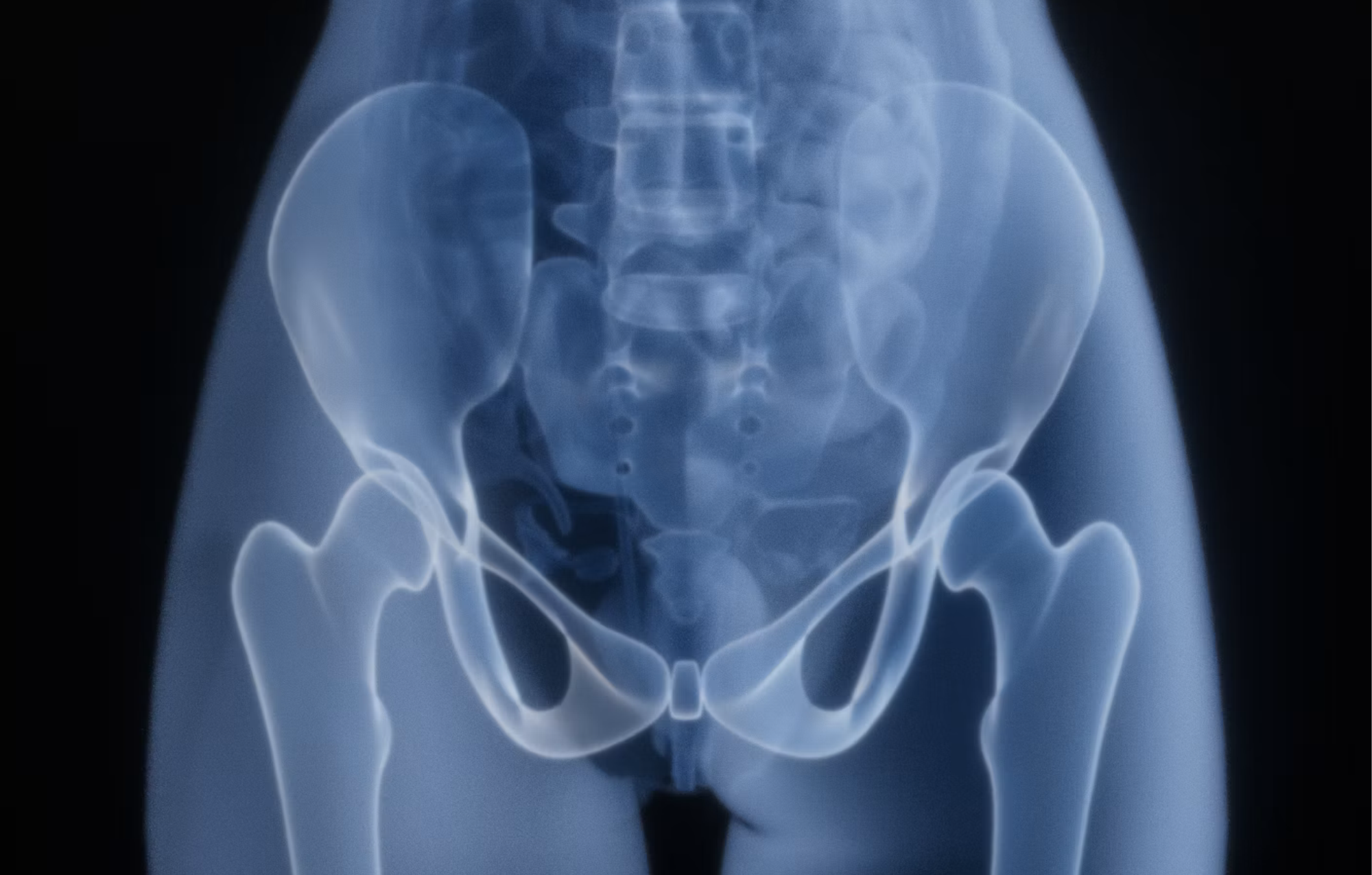

Metal implants can be designed to encourage bone growth into their surface or structure. Metal is much stiffer than bone, so an implant can change how load is transferred through the surrounding bone. This can contribute to bone loss around the implant, a process known as stress shielding, which can affect implant stability.
Porous tantalum is one approach to reducing that stiffness difference.
A 2023 review in Biomimetics reports an elastic modulus of 185 GPa for tantalum and 3 GPa for a porous tantalum structure. The review gives values of about 0.4 GPa for trabecular (cancellous) bone and 17.9 GPa for cortical bone, putting the reported porous tantalum structure much closer to the stiffness range of bone than dense tantalum.
Its open structure also provides space for new bone to grow into, helping to anchor the implant.
Porosity as a design variable
Researchers from Renji Hospital and collaborating institutions studied trabecular tantalum scaffolds made by additive manufacturing at 60%, 70% and 80% porosity, reporting their findings in Frontiers in Bioengineering and Biotechnology in 2023.
In cell studies, the 70% and 80% scaffolds showed better proliferation and osteogenic differentiation than the 60% scaffold. In a rat femoral defect model, both 70% and 80% showed better bone ingrowth than 60%, while the 70% scaffold showed the greatest amount of bone bound to the material.
The authors concluded that 70% porosity could be the optimal choice for subsequent implant design.
Cell adhesion and bone integration, then, are not the same thing. It is also a rat model, so the result points to a design direction rather than a clinical specification.
Tantalum can also be used as a coating
Solid tantalum is dense and stiff, with an elastic modulus of 185 GPa in the Biomimetics review above. Coating a titanium alloy with a thin tantalum layer puts tantalum at the implant surface while retaining the titanium alloy as the underlying material.
Researchers at the Second Affiliated Hospital of Xi'an Jiaotong University deposited a 550 nm tantalum coating onto Ti6Al4V by DC magnetron sputtering, reporting in BMC Biotechnology in 2025.
In their rabbit study, the team compared three groups: uncoated Ti6Al4V, commercial porous tantalum cylinders, and Ti6Al4V coated with tantalum. Both tantalum groups showed more extensive new bone formation around the implant than uncoated Ti6Al4V.
In cell culture, the coated material supported cell adhesion, proliferation and early osteogenic differentiation to a similar degree as a porous tantalum group. In the rabbit model, the coated implants showed higher bone-implant contact than both other groups at 4 and 8 weeks, assessed by histological staining and fluorescent labelling.
The authors describe these findings as preliminary. After surgery, implant position was checked by X-ray only, and they note that tantalum's density produces imaging artefacts that make bone volume hard to quantify by micro-CT. They state that long-term in vivo and mechanical validation is needed before clinical application can be considered.
A 550 nm coating is thinner than the wavelength of visible light. That gives a sense of how little tantalum is needed to change the surface presented to tissue.
Context: tantalum's surface oxide
The paragraphs below provide general materials background and are not findings of either study.
Tantalum forms a stable tantalum pentoxide (Ta₂O₅) oxide layer at its surface. This oxide is closely associated with tantalum's high corrosion resistance and has also been widely studied in biomedical applications.
The same oxide is important in another field: tantalum capacitors. Sintered tantalum powder is anodised to form a Ta₂O₅ dielectric layer over a large internal surface area. Increasing the effective electrode area increases capacitance, while a thinner dielectric layer also increases capacitance, allowing high capacitance in a relatively small component.
Tantalum from Advent
Advent supplies tantalum in seven forms: foil, ribbon, sheet, wire, insulated wire, rod, and woven mesh or gauze. We do not know where the tantalum used in either study came from.
For sizes, tempers and purities, see our Spotlight on Tantalum or the tantalum product page.