Spotlight on Tungsten: Wire, Foil, Sheet and More for Research
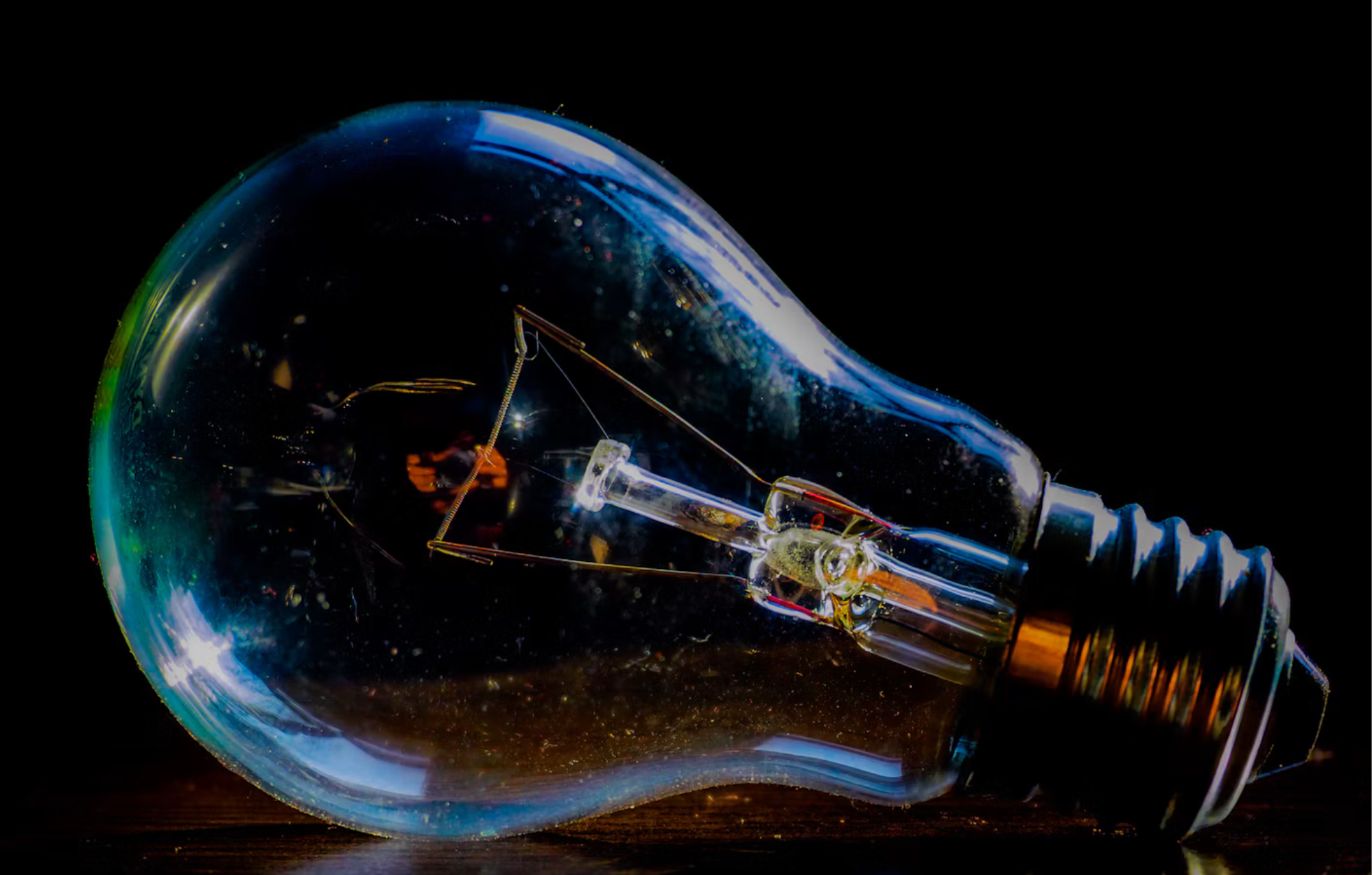

Tungsten has the highest melting point of any metal, at 3,422 °C, and a density of approximately 19.25 g/cm³. Its Young's modulus is around 400 GPa, making it a stiff material with low thermal expansion. Bulk tungsten is brittle at room temperature and difficult to machine, but specialist processing makes it available as fine wire. These properties make tungsten useful for research components that must retain their shape at high temperatures or operate in vacuum. Advent supplies tungsten wire in diameters as small as 0.004 mm.
What makes tungsten different
Tungsten has atomic number 74. Strong metallic bonding gives it a high melting point, while its low vapour pressure at high temperatures makes it suitable for applications such as filaments and electron sources. Its thermal expansion is approximately 4.5 µm/(m·K) near room temperature, among the lowest of the metals.
Its mechanical behaviour depends on its processing history. Cold working can increase strength and improve room-temperature ductility, while recrystallisation during annealing can make tungsten more brittle. Drawn wire has an elongated grain structure that affects how it responds to bending and heating. The terms used to describe its condition do not, on their own, establish how a product will behave during forming.
Tungsten resists many acids at room temperature but is attacked by hydrofluoric and nitric acid mixtures, as well as hot alkaline oxidising solutions. When heated in air, it oxidises to form tungsten oxides. Oxidation becomes increasingly important as the temperature rises, so high-temperature applications generally require a controlled atmosphere, such as vacuum, an inert gas or a suitable reducing gas.
Where tungsten is used in research
Neurophysiology. Fine, stiff tungsten wire is used in some microelectrodes for extracellular recording. Insulated wire can help isolate the recording site from surrounding tissue.
Electron sources and microscopy. Tungsten filaments are used in thermionic electron sources. Sharpened tungsten tips are used in field-emission systems and as probes in scanning tunnelling microscopy (STM).
High-temperature and vacuum work. Tungsten is used in heaters, radiation shields, sample supports and evaporation sources where its high melting point and low vapour pressure are useful, provided the operating conditions are suitable.
Thermocouples and X-ray systems. Tungsten-rhenium alloys are used in high-temperature thermocouples. Tungsten is also used in X-ray targets and radiation shielding because of its high atomic number and density.
Advent's articles on fine tungsten wire for brain probes, tungsten wires in Alzheimer's research, insulated tungsten wire in extreme conditions and gold-plated tungsten wire explore some of these applications in more detail. Link each article once its live URL has been confirmed.
Choosing the right form
Advent supplies tungsten in ten forms. The most suitable form depends on the required dimensions, shape, mechanical properties and application.
Ribbon: 0.025 mm to 0.225 mm thick, as rolled. Suitable for filaments and heater strips.
Foil: 0.025 mm to 0.125 mm thick, mostly as rolled, with one stress-relieved 0.1 mm product. Suitable for thin shields and sample carriers.
Sheet: 0.15 mm to 3.0 mm thick, as rolled, including one 1.0 mm product with a diamond-polished side. Suitable for heat shields and supports.
Wire: 0.004 mm to 1 mm in diameter. The listed products include hard-temper wire up to 0.02 mm, annealed wire from 0.025 mm to 0.25 mm, and as-drawn wire from 0.3 mm. Suitable for microelectrodes, probe tips and filaments.
Wire, straight cut lengths: 0.025 mm to 1 mm in diameter, mostly annealed. Useful where a pre-cut straight length is preferable to a spool.
Insulated wire: Bare diameters of 0.025 mm to 0.2 mm, mostly with quadruple PTFE insulation, with one Formvar-insulated size. Suitable for electrodes and probes.
Insulated wire, straight cut lengths: 0.05 mm, 0.075 mm and 0.125 mm bare diameters, with quadruple PTFE insulation.
Plated wire: 0.02 mm, 0.05 mm and 0.1 mm tungsten wire with gold plating, providing a gold surface on a tungsten core.
Woven mesh or gauze: Plain weave from 20 to 150 mesh per inch. Suitable for grids and supports. Wire diameter also affects the opening size and open area.
Rod: One listed product, 2 mm in diameter, centreless ground.
Tungsten's mechanical properties depend on its processing history and microstructure. Cold-worked, as-rolled and as-drawn materials may have different strengths and ductilities. Annealing can relieve stress, but recrystallisation can reduce room-temperature ductility. Check the condition and technical data for the individual product before bending or coiling it.
Choosing the right purity
Advent's tungsten products are listed at several purity levels, depending on form and size. Most are specified at 99.95%.
Other levels are listed for selected products: 99.95+% for the 0.005 mm and 0.01 mm wires, 99.97% for one 2.0 mm sheet, 99.98% for three quadruple-PTFE insulated wires, 99.996+% for one 0.13 mm ribbon, and 99.85% for the Formvar-insulated wire. The gold plating on the plated wire is listed at 99.99%.
Where material composition is important to an experiment, check the purity specification and technical analysis for the individual product. Review the stated limits for metallic impurities and other elements against the requirements of your application.
Frequently asked questions
Why is tungsten difficult to machine?
Tungsten is hard and can be brittle at room temperature, particularly after recrystallisation. This can make conventional cutting difficult and increase the risk of chipping or cracking. Grinding, electrical discharge machining and suitable etching methods may be used, depending on the product form and required dimensions.
Is annealed tungsten wire suitable for bending?
Not necessarily. Tungsten's response to bending depends on its processing history and microstructure. Check the technical data for the individual product and confirm its suitability for your forming requirements.
Which tungsten form is used for microelectrodes?
Fine tungsten wire, including insulated wire, is used in some microelectrode applications because it is stiff at small diameters. The required diameter, insulation and tip preparation depend on the application and recording method.
Can I order other tungsten sizes or purities?
Some tungsten sizes and specifications may be available to order specially. Contact Advent Research Materials with your required form, dimensions and purity to discuss your requirements.
Looking for tungsten for your research? Contact the Advent Research Materials team to discuss forms, purity and availability: Contact Advent Research Materials |