Articles
Our team of experts produce regular content to shine a light on the latest news and trending topics within key areas of research. Read our latest articles to find out more about our new product lines, customer research highlights and corporate milestones.

Why Sustainable Sourcing Matters in Scientific Research
Advent ReMaterial is a free-of-charge recycling initiative open to scientists, researchers, and all Advent customers. The premise is simple: most used materials originally supplied by Advent Research Materials can be returned to us, and we will recover, repurpose, refine, or recycle them responsibly.
.png?width=50)
How Science is Rewriting the Rules of Wine | Controlled Micro-Oxygenation in Wine Aging
Researchers at the University of Auckland used Advent Research Materials' Titanium to investigate micro-oxygenation in wine ageing. Their findings demonstrated how precise material specification enables reproducible results in a craft that has long relied on intuition and tradition.

Tungsten-Rhenium Alloys: High-Temperature Performance for Extreme Environments
When temperature measurement or structural performance must extend beyond the limits of conventional materials, tungsten-rhenium (W-Re) alloys are often the only viable option. By combining tungsten's exceptional refractory properties with rhenium's ability to restore ductility at elevated temperatures, W-Re alloys occupy a unique position in research, aerospace, and advanced energy applications.
.png?width=50)
Why Platinum/Iridium 90:10 Was Chosen for a Neonatal Sweat Glucose Biosensor
Measuring glucose in a premature baby currently means a heel-prick. A team at Imperial College London has built a patch that reads glucose from natural sweat instead — and the sensor at its centre is a 50 μm platinum/iridium wire. Published in Science Advances, July 2026.
.png?width=50)
Platinum-Rhodium Thermocouples: Measuring Temperature Where Most Sensors Fail
A platinum-rhodium thermocouple measures temperature by generating a tiny voltage across a junction of two dissimilar noble-metal wires — a direct expression of the Seebeck effect. This article explains that mechanism, sets out the differences between Type R, S and B, and shows why adding rhodium to platinum is what makes reliable measurement above 1500°C possible.

Indium: From Cryogenic Seals to Compound Semiconductors
Indium is a soft, silvery-white post-transition metal that occupies a quiet but essential role across some of the most demanding areas of modern research and engineering. With a melting point of just 156.6°C and exceptional ductility even at cryogenic temperatures, indium exhibits a suite of properties that make it irreplaceable in applications where conventional metals fall short.

How a CSIC Team in Madrid Used Advent Research Materials to Build Nanostructured Polymers That Cool Buildings Without Power
A CSIC team in Madrid used high-purity (99.999%) aluminium foil from Advent Research Materials as the template substrate for a nanostructured PVDF radiative cooler that reflects 82.4% of sunlight and sits 12.9 °C below ambient in full sun.
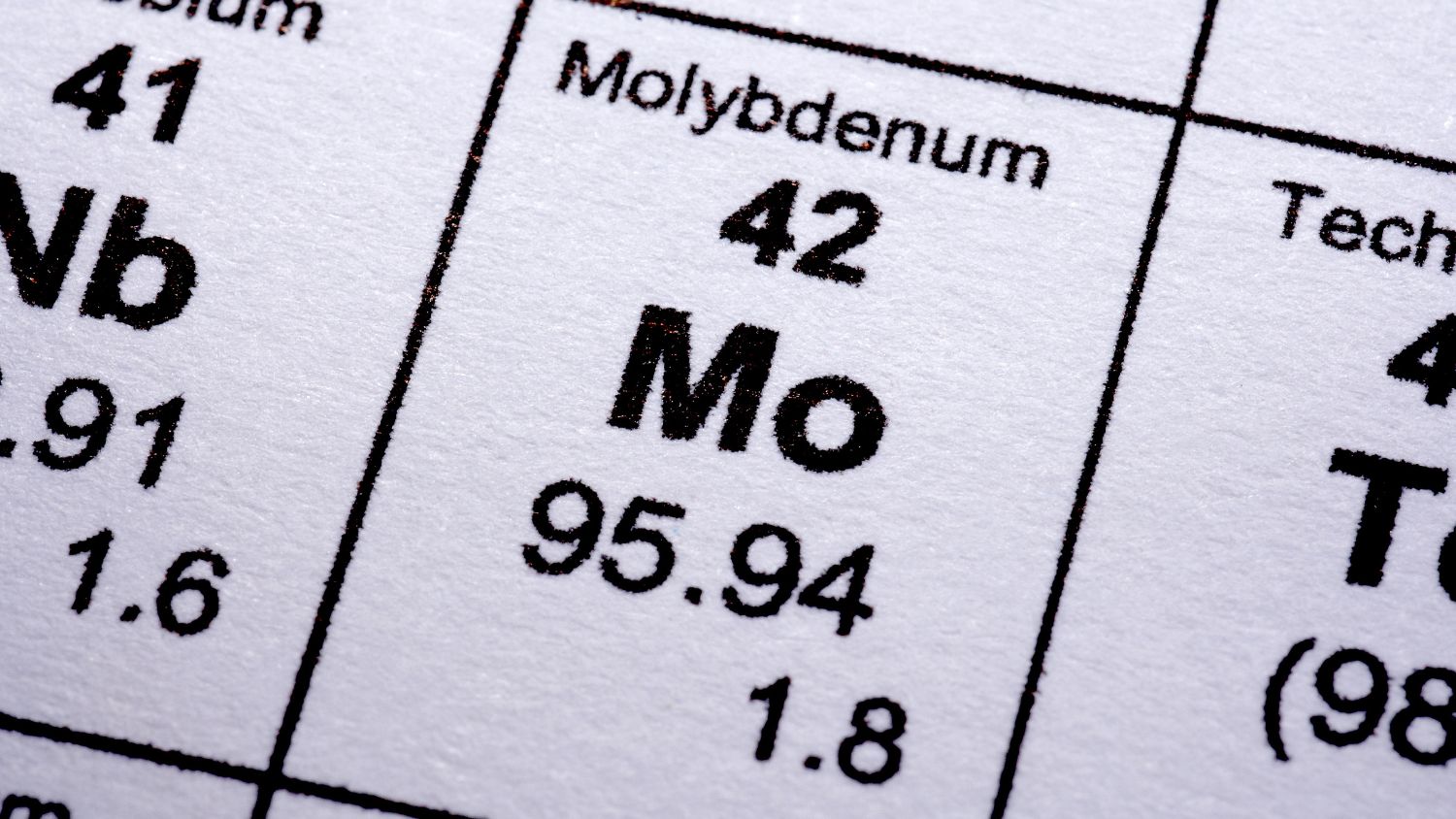
A Spotlight on Molybdenum
Molybdenum is a refractory metal that sits at the intersection of several demanding technological fields — from high-temperature furnace engineering and vacuum technology to semiconductor manufacturing and advanced energy research.
.jpg?width=50)
Sputtering Targets: How Material Purity Shapes Thin Film Performance
Target purity is one of the most critical — and frequently underestimated — variables in sputtering. This article examines how chemical purity, grain structure, and target density affect deposited film quality, reviews key materials from ITO and molybdenum to precious metals and refractory oxides, and looks at where specialist target development is heading, from high-entropy alloys to quantum device fabrication.
.jpg?width=50)
Precision at the Point of Care: Medical Grade Metals in Implants, Sensors, and Devices
The materials used in medical devices and implants must meet some of the most exacting standards in all of engineering. Biocompatibility, corrosion resistance, mechanical reliability, and — in many applications — electrical performance are all non-negotiable. High-purity metals sit at the heart of this challenge. From deep-brain stimulation electrodes to MRI superconducting magnets and orthopaedic implants, the selection and purity of the base material directly determines whether a device performs safely over years or decades inside the human body.