Research Materials for Perovskite Solar Cells and Optoelectronics
Perovskite materials have rapidly emerged as one of the most exciting frontiers in energy research. In just over a decade, perovskite solar cells have progressed from a laboratory curiosity to certified efficiencies exceeding 26.6% — rivalling conventional silicon — while opening entirely new possibilities in LEDs, photodetectors, and next-generation tandem cell architectures.
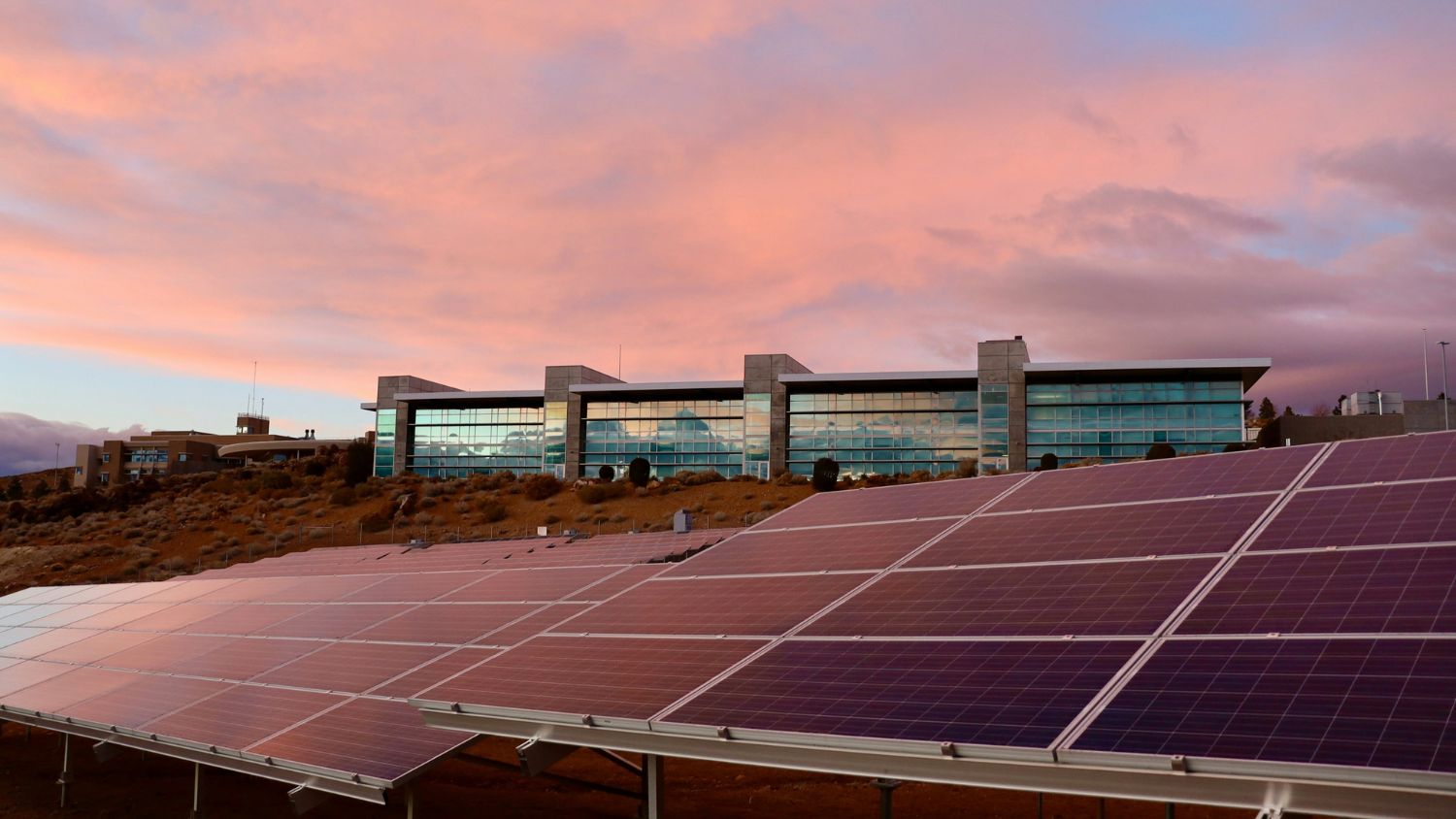
What Are Perovskite Materials?
At Advent Research Materials, we supply high-purity metals, thin foils, and specialist polymers used at every stage of perovskite research: from substrate preparation and thin-film electrode deposition to device encapsulation and characterisation. Whether you are working on single-junction inverted cells, flexible devices, or perovskite-silicon tandems, our materials support the precision your research demands.
Perovskites are a class of materials sharing the crystal structure ABX₃, where A and B are cations and X is an anion (typically a halide). In the context of solar cells and optoelectronics, the most researched are organic-inorganic lead halide perovskites such as methylammonium lead iodide (MAPbI₃) and its compositional variants.
Their appeal lies in a combination of properties that are difficult to achieve simultaneously in conventional semiconductors: high charge carrier mobility, long diffusion lengths, tunable bandgap, and — critically — the ability to be deposited from solution at relatively low temperatures. This makes them attractive both for high-performance photovoltaics and for scalable, low-cost manufacturing routes.
The primary challenge facing the field in 2026 is stability. Perovskite films are sensitive to moisture, heat, and UV exposure. Current research is focused on compositional engineering, interface passivation, encapsulation strategies, and the integration of graphene and reduced graphene oxide (rGO) interlayers to extend device lifetimes to commercially viable thresholds.
Key Research Areas in 2026
1. Inverted (p-i-n) Perovskite Solar Cells
Inverted architectures have become the dominant focus for scalable, high-efficiency perovskite cells. They offer lower temperature processing, better compatibility with tandem stacks, and reduced hysteresis. Research in this area demands high-quality transparent and metal contact materials with tightly controlled purity and geometry.
2. Perovskite-Silicon Tandem Cells
Combining perovskite top cells with silicon bottom cells is the most commercially advanced route to exceeding the Shockley-Queisser efficiency limit for single-junction devices. Several groups have demonstrated certified efficiencies above 34.85%. Material quality at the interface layers is critical — trace impurities in contact metals can introduce non-radiative recombination that significantly reduces performance.
3. Flexible and Wearable Perovskite Devices
Depositing perovskite films on flexible polymer substrates opens applications in wearable energy harvesting, curved photovoltaic surfaces, and lightweight portable devices. Research in this area requires polymer substrates with excellent dimensional stability and chemical resistance at processing temperatures.
4. Perovskite LEDs (PeLEDs) and Photodetectors
The same properties that make perovskites excellent light absorbers also make them efficient emitters. Perovskite LEDs are approaching the performance of OLEDs for display and lighting applications, and perovskite photodetectors are attracting interest for X-ray imaging and scintillation applications.
5. Stability and Encapsulation Research
With efficiency largely solved for small-area devices, the field is now focused on operational stability — achieving 25-year outdoor lifetimes to match silicon. Material selection for encapsulation layers, barrier films, and edge sealing directly impacts whether devices can survive thermal cycling, humidity ingress, and UV exposure at scale.
Materials We Supply for Perovskite Research
The table below summarises the key Advent Research Materials products used in perovskite research, the formats available, and their primary application in device fabrication.
Material | Available Formats | Application in Perovskite Research |
Indium | Foil, wire, shot, disc, powder | Source material for ITO (indium tin oxide) transparent conductive electrodes — the standard front contact for most perovskite cell architectures |
Gold | Foil, wire, sputtering targets, evaporation pellets | Back contact metal for perovskite cells; high work function ensures good hole extraction; also used in reference electrodes for electrochemical characterisation |
Silver | Foil, wire, powder, sputtering targets | Low-cost back contact alternative to gold; widely used in large-area perovskite modules; also used in printed electrodes for flexible devices |
Titanium | Foil, wire, disc, sheet, rod | Source for TiO₂ electron transport layers (ETL) via spray pyrolysis or ALD; titanium foil also used as substrate in some solid-state cell configurations |
Aluminium | Foil, wire, sputtering targets | Back contact in inverted (p-i-n) perovskite cells; also used for encapsulation barrier structures |
Platinum | Wire, foil, mesh, sputtering targets | Counter and reference electrodes in electrochemical impedance spectroscopy (EIS) and cyclic voltammetry characterisation of perovskite devices |
Polyimide (Kapton®-type) | Film, sheet | High-temperature-stable flexible substrate for flexible perovskite devices; withstands annealing temperatures up to ~350°C; excellent chemical resistance |
PTFE | Sheet, tape, tube, rod | Chemical-resistant sealing and barrier applications in glovebox processing environments; also used in filtration during perovskite precursor solution preparation |
Electrode and Contact Material Selection in Perovskite Cells
The choice of contact metal has a direct impact on device performance. Gold remains the gold standard (literally) for research-grade cells due to its high work function (~5.1 eV), chemical inertness, and compatibility with perovskite films. However, gold can migrate into the perovskite layer over time, and research groups increasingly use ultrathin buffer layers or alternative contact stacks to address this.
Silver offers a cost-effective alternative, with a work function of ~4.26 eV suitable for electron-selective contacts in inverted structures. Its key limitation is sensitivity to halide ions from the perovskite layer, which can cause corrosion — an active area of interface engineering research.
Aluminium is widely used in academic lab settings for its availability and low cost, though its lower work function limits it to specific device architectures. For flexible devices, silver nanowire networks and printed silver contacts are increasingly preferred over vacuum-deposited metals.
Indium and ITO Substrates
Indium tin oxide (ITO) is the dominant transparent conductive oxide (TCO) used as the front electrode in perovskite solar cells and LEDs. It combines high optical transparency (>80% in the visible range) with low sheet resistance, making it near-ideal for light-in, charge-out configurations.
High-purity indium is the key feedstock for ITO sputtering targets and evaporation sources. Impurity levels in the source indium directly affect the optical and electrical properties of the deposited ITO film — a particular concern for researchers targeting reproducible, publication-quality device performance.
Advent Research Materials supplies high-purity indium in foil, wire, shot, and disc formats. For researchers requiring custom geometries for sputtering target fabrication or evaporation boat loading, bespoke cutting and forming is available on request.
Flexible Substrates: Polyimide for Next-Generation Devices
Polyimide films (including Kapton®-equivalent grades) have become the substrate of choice for flexible perovskite solar cells and detectors. They offer a combination of properties difficult to match with other polymers: thermal stability up to ~350°C (sufficient for most perovskite annealing steps), low coefficient of thermal expansion, excellent chemical resistance, and dimensional stability under mechanical stress.
Key considerations when selecting polyimide for perovskite research include surface roughness (which affects perovskite film nucleation and grain growth), gas barrier properties (important for moisture ingress), and compatibility with downstream encapsulation processes.
Advent supplies polyimide film in a range of thicknesses. Contact us to discuss your specific requirements for flexible substrate applications.
Perovskite Research and the Stability Challenge
The most cited barrier to commercialisation of perovskite solar cells is long-term operational stability. Three degradation pathways dominate the literature:
- Moisture ingress: Water molecules react with the perovskite lattice, causing irreversible decomposition. Encapsulation and barrier layer research is critical here.
- Thermal degradation: Elevated temperatures (above ~85°C) accelerate ion migration and phase segregation within the perovskite film.
- Ion migration: Halide ions within the perovskite lattice can migrate under applied electric fields, accumulating at interfaces and causing hysteresis and performance loss over time.
Material strategies being actively researched in 2026 include: graphene and reduced graphene oxide (rGO) interlayers as moisture barriers and charge transport enhancers; 2D/3D perovskite heterostructures that cap the 3D bulk with a more stable 2D phase; and improved encapsulant chemistries. The quality of the metal contacts and buffer layers plays a direct role in ion migration behaviour — making contact material selection a key research variable, not just a commodity choice.
Related Sectors and Materials
Perovskite research overlaps significantly with several other sectors Advent supplies. Researchers working on tandem cells will also require materials relevant to our Semiconductors & Microelectronics and Renewable Energy pages. Those working on perovskite photodetectors or scintillators may find relevant context in our Diagnostic Imaging section.
For researchers exploring the intersection of perovskite optoelectronics with 2D materials — particularly graphene and MoS₂ hybrid devices — Advent can discuss substrate and contact material requirements on request.
Ordering and Enquiries
Our materials are available in standard catalogue formats and as bespoke cuts and geometries. Small quantities are held in stock for immediate dispatch from our Oxford facility. For larger quantities, custom purities, or research-specific dimensions, please contact our technical team directly.
Browse our full product range or contact us at info@advent-rm.com to discuss your perovskite research materials requirements.